

Formal estimates happen at major milestones. Cost decisions happen in between.
As value option items are approved and scope changes, the project’s real cost position keeps moving. But without a new estimate, teams are often left manually piecing together an updated number in a spreadsheet.
Estimate Revisions at a Glance
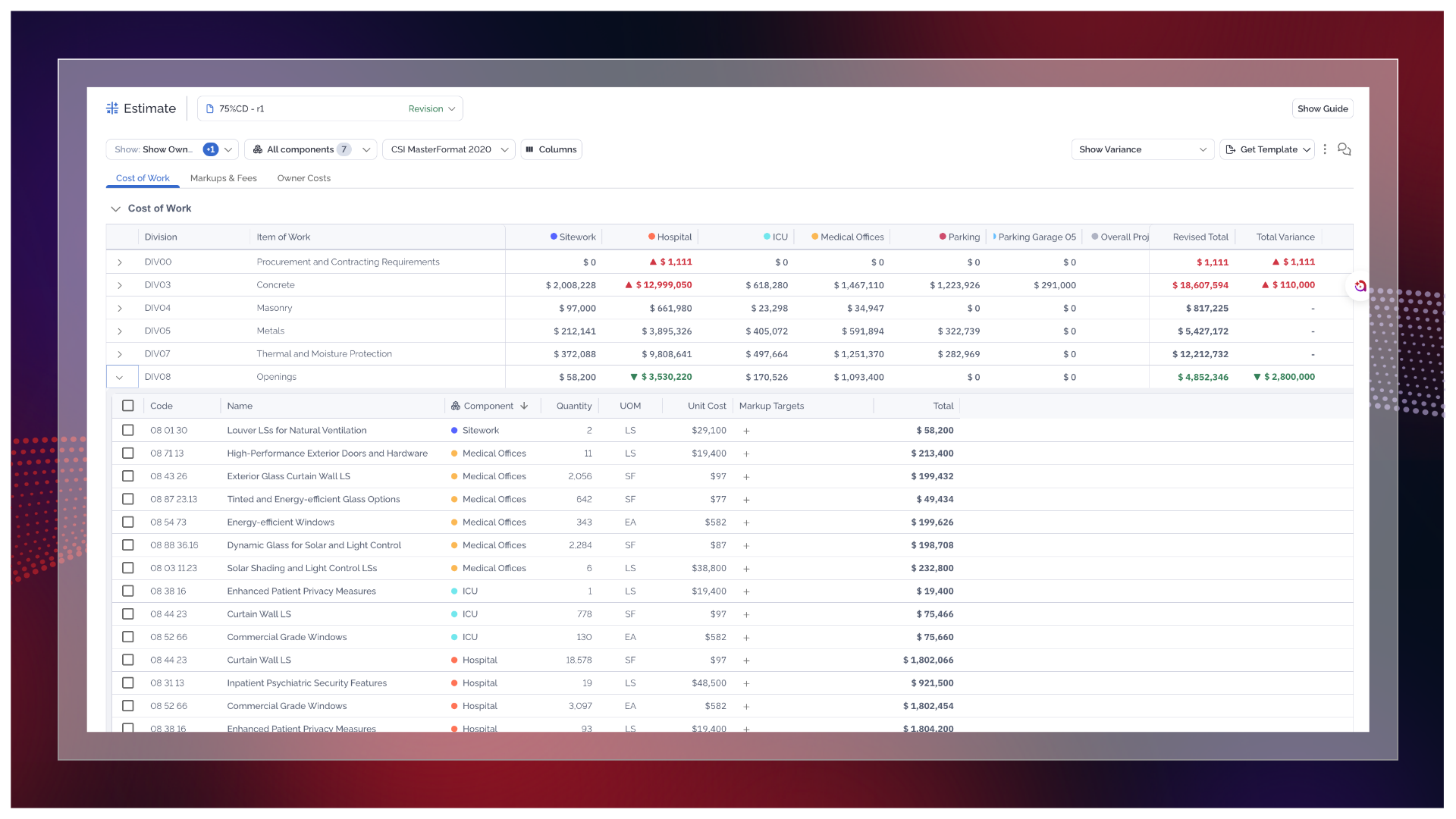
Estimate Revisions lets teams incorporate approved ForeSite value option items into the current milestone estimate, creating an accurate, shareable cost snapshot without leaving ConCntric or rebuilding the update by hand.
- Automatically apply approved ForeSite items to the current milestone estimate.
- Preview the revised cost breakdown and assign missing cost-group codes before publishing.
- See revised totals and variances by division, with drilldown into the line items behind each change.
- Publish revisions to your next Milestone, track them in Vision, and export them in PDF, Excel, and or as part of a custom report.
Keep the Number Current
Projects do not wait for the next milestone before changing. Estimate Revisions closes the gap between formal estimates by bringing approved cost decisions into a revised estimate that teams can review, trace, and share.
Each published revision is numbered and appears beneath the formal milestone it extends in the Estimate page. It also shows up as a distinct point in the Vision cost-trend graph, giving teams a clear record of how the project moved between major milestones. Revisions can be exported in PDF, Excel, and in custom reports, with revised totals and variances included alongside the base estimate. If a value option item is later reverted, the revision displays a warning so teams can see that the underlying decision changed.
Instead of compiling another offline update that may be stale by the time the meeting starts, teams can publish a traceable revision directly in ConCntric and see exactly what changed and what drove it.
The result is less manual reconciliation, fewer opportunities for error, fewer unofficial versions of project cost, and a clearer answer when someone asks:
“Where does the project stand right now?”
